
Last Updated :
September 24, 2026
Home InsuranceDo You Need Flood Insurance? When It's Required and When It's Your Call
Your homeowners policy won't cover a flood. Here's when flood insurance is federally required, how to find your zone, and why low-risk isn't no-risk.
Key Takeaway
Your homeowners policy won't pay for flood damage. Flood insurance is federally required when your home is in a high-risk A or V zone and you have a federally backed mortgage. Outside those zones it's your call, but nearly a third of flood claims come from lower-risk areas.
Most homeowners assume their policy covers flood damage. It doesn't.
Whether you're required to carry flood insurance usually comes down to two things: your flood zone and your mortgage. Here's how to tell if you need it, how to find out for sure, and why a low-risk label on a map isn't the same as being safe.
Your homeowners policy stops at the water's edge
A standard homeowners policy covers a lot of water damage. A burst pipe, an overflowing washing machine, rain coming through a roof the wind tore open. What it typically won't cover is flood, meaning water that rises from outside and comes in at ground level.
According to the National Flood Insurance Program, most homeowners insurance does not cover flood damage, and a home policy won't satisfy a lender's flood requirement either. If you want protection from rising water, it's a separate policy.
If you're fuzzy on what your home policy does and doesn't handle, our complete home insurance guide lays it out, and where home damage usually starts covers the everyday water damage a standard policy is built for.
When flood insurance is actually required
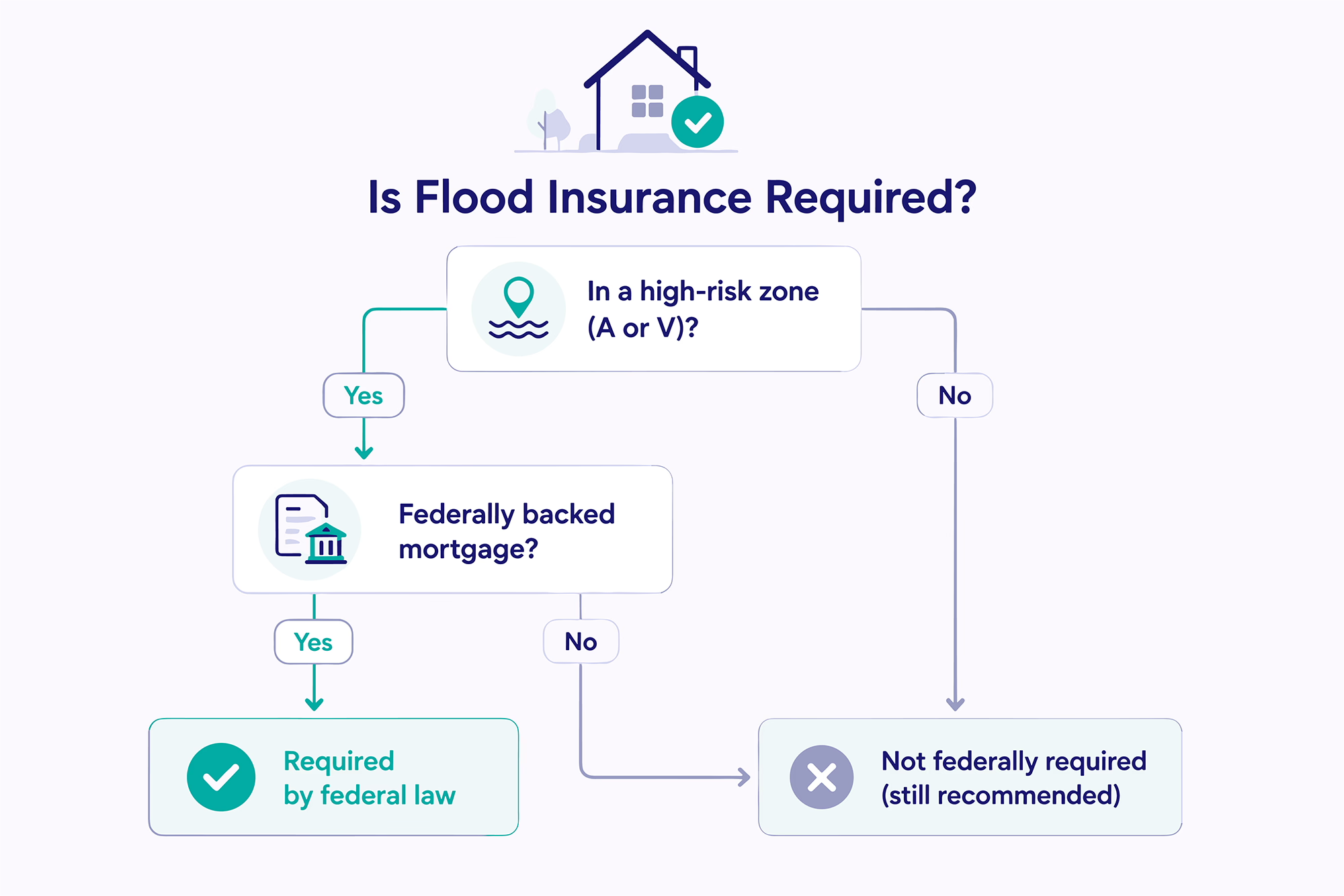
Here's the rule, stripped down. Flood insurance is federally required when both of these are true.
- Your property sits in a high-risk flood zone, called a Special Flood Hazard Area. On FEMA's maps, these are the zones whose codes start with A or V.
- You have a mortgage from a federally backed or federally regulated lender, which covers most home loans, including FHA, VA, USDA, and anything sold to Fannie Mae or Freddie Mac.
If both are true, FEMA requires flood insurance as a condition of the loan, and the lender has to keep it in place for the life of the loan. This traces back to a federal law, the Flood Disaster Protection Act, so it isn't your bank being difficult. The rule sits above them.
If either piece is missing, the property is outside the high-risk zone, or you don't hold a federally backed mortgage, the federal mandate generally doesn't apply. Some lenders still require coverage on their own, so ask yours directly.
How to find your flood zone
Two conditions decide the requirement, and the one you can check yourself is your flood zone.
FEMA publishes the maps at the Flood Map Service Center, where you can search by address and see your zone. If the code starts with A or V, you're in a high-risk area. If it starts with X, B, or C, you're in a moderate-to-low-risk area where coverage generally isn't required.
Your lender will also order a flood determination during closing, which is the official read they use to set the requirement. Where a property sits shapes a lot of its insurance picture, not just flood, which we covered in how location affects your insurance costs.
"Not required" doesn't mean "won't flood"
This is where people get burned. A low-risk label tells you the lender won't force the issue. It doesn't tell you the water won't come.
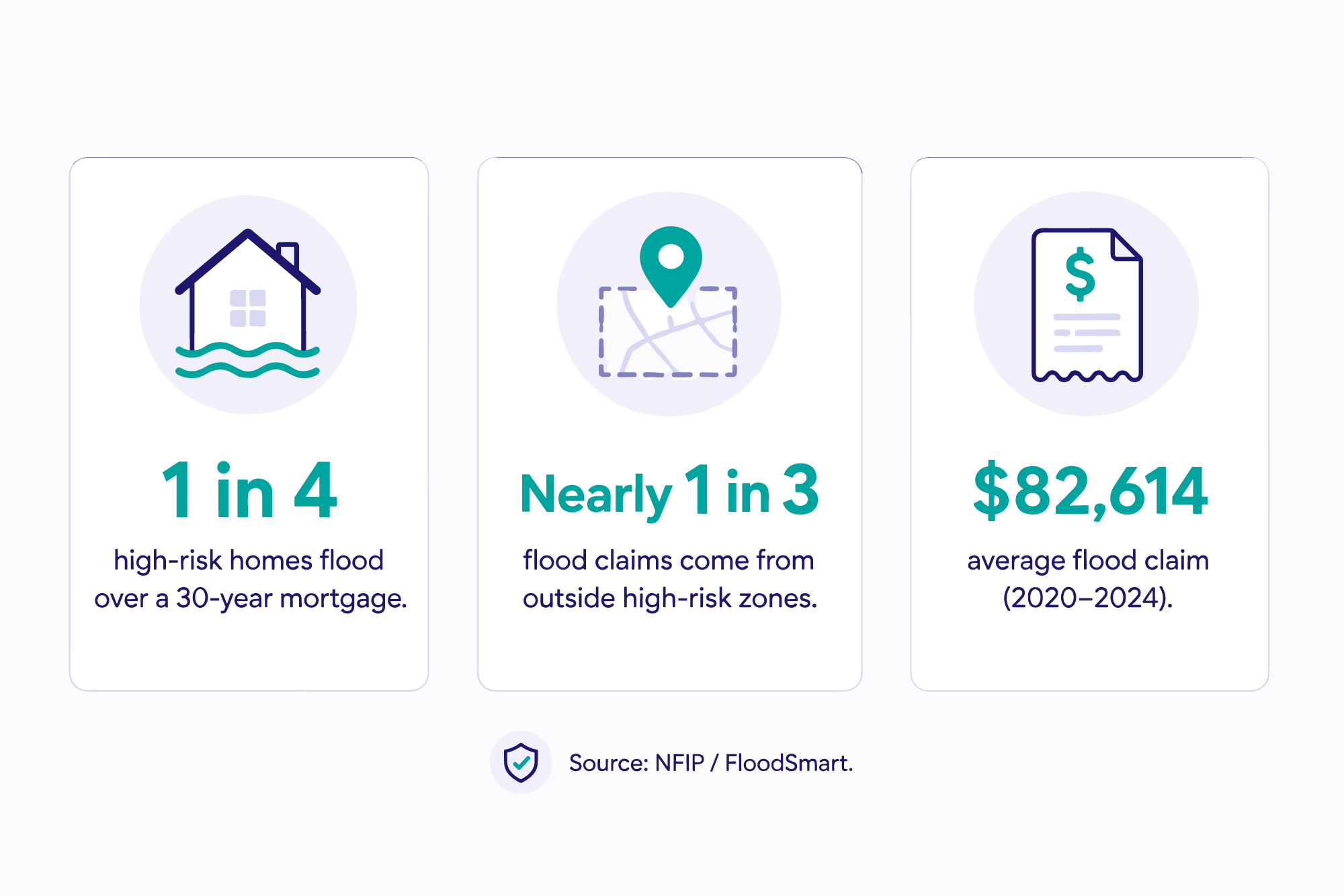
The numbers back that up. The National Flood Insurance Program reports that nearly a third of its flood claims over the last decade came from properties outside high-risk zones. FEMA estimates that a home in a high-risk flood zone has roughly a 1 in 4 chance of flooding over the life of a 30-year mortgage. And between 2020 and 2024, the average flood claim payment ran to $82,614.
So treat the map as a floor, not a verdict. If you're in a moderate-risk zone near the coast, a bayou, or a spot that's flooded before, coverage can be worth carrying even when no one is making you.
What flood insurance covers
An NFIP flood policy generally splits into two parts. Building coverage handles the structure, the foundation, and built-in systems. Contents coverage handles what's inside, and you usually buy that part separately.
A couple of things to know. NFIP policies have maximum coverage limits, so if you own a higher-value home, you may need a private flood policy to fill the gap above them. And a basement is treated differently than the rest of the house, with tighter limits on finished space and belongings kept down there. Coverage terms and exclusions vary by policy, so read yours.
Premiums are tied to the property's specific flood risk under FEMA's current rating system, which factors in things like elevation and distance to water. Two homes on the same street can price differently.
The mortgage connection people miss
Flood insurance and your mortgage are tied together in two ways worth knowing.
First, escrow. When a lender requires flood coverage, the premium usually gets folded into your escrow account, which raises your monthly payment. If your payment jumped and you recently landed in a flood requirement, that's often the reason. We broke down that mechanic in why your mortgage payment increased.
Second, lapses. If you're required to carry flood insurance and you let it lapse, your lender can buy a policy on your behalf and bill you for it. That coverage protects the lender's stake, not your belongings, and it often costs more than a policy you'd pick yourself. Here's how that works: lender-placed insurance.
What to do next
Whether you're buying, refinancing, or just want to know where you stand, the steps are the same.
- Look up your address at the FEMA Flood Map Service Center and note your zone.
- Ask your lender whether it requires flood insurance on your loan, even if you're outside a high-risk zone.
- If you're buying, get the flood determination early, since a requirement can change what you can afford at closing.
- Compare an NFIP policy against a private flood option. Coverage and price both vary, so look at what each actually covers, not just the number.
- If you carry a policy, keep it active. A lapse is how you end up with lender-placed coverage you didn't choose.
Where to start
Flood coverage confuses people because two systems decide it together: FEMA's maps and your lender's rules. If you're not sure whether you're required to carry it, or what a policy should include, that's a fair thing to hand to an agent.
That's what we do. Start with our insurance solutions, and if you're sorting out coverage around a home purchase, changing a policy after closing covers the timing.
The short version
Your homeowners policy won't pay for a flood. You're federally required to carry flood insurance when your home sits in a high-risk zone, any A or V zone, and you have a federally backed mortgage. Outside those zones it's your call, but nearly a third of flood claims come from lower-risk areas, so "not required" isn't the same as "safe." Look up your zone, ask your lender, and don't let a required policy lapse.
Covered is a licensed insurance agency. Not all carriers or products are available through Covered. Availability varies by state. Compensation may be received from carriers.


.svg)
.svg)