
Last Updated :
October 8, 2026
Home InsuranceLandlord Insurance vs. Renters Insurance: Who Covers What?
Landlord insurance and renters insurance protect different people and different risks. Here’s what property owners and tenants need to know.
Key Takeaway
Landlord insurance protects the property owner's building and lost rental income, while renters insurance protects the tenant's belongings and liability, and neither one substitutes for the other. The post breaks down what each policy actually covers and how landlords can require tenants to carry their own coverage.
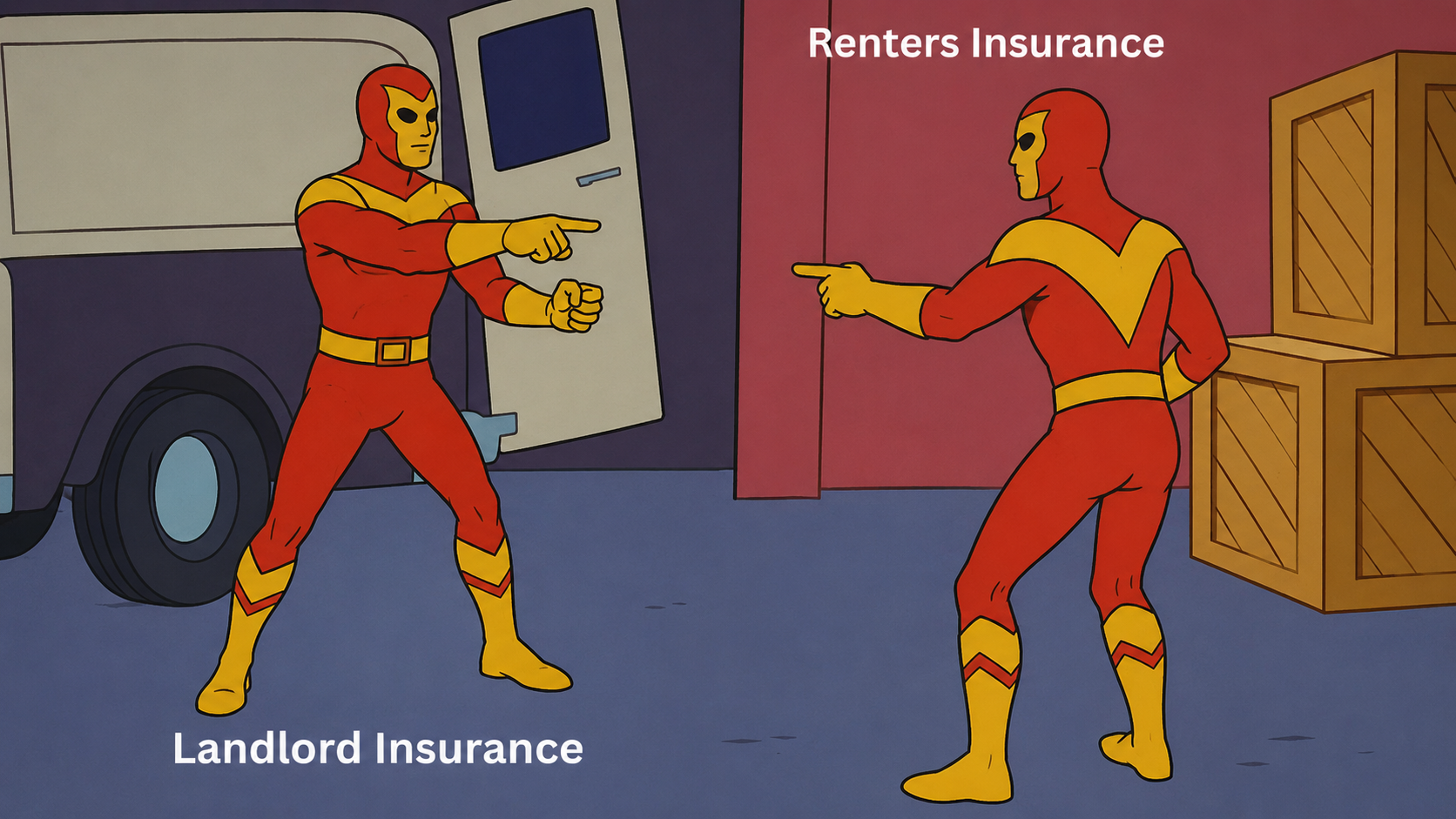
Landlord insurance and renters insurance are not the same thing. So…what covers what?
To put it plainly; landlord insurance is designed for the property owner. Renters insurance is designed for the tenant.
If a fire, theft, water leak, or liability issue happens, the question is not just “is there insurance?”
The question is whose property was damaged, whose liability is involved, and which policy was built for that risk?
Think about it like this:
Landlord insurance protects the rental property owner. Renters insurance protects the person living in the rental.
Important note: This article is for general educational purposes only. It is not legal, financial, or insurance advice. Coverage depends on the policy, insurer, endorsements, state rules, lease terms, property use, and claim facts. Always review the policy and speak with a licensed insurance professional about your specific situation.
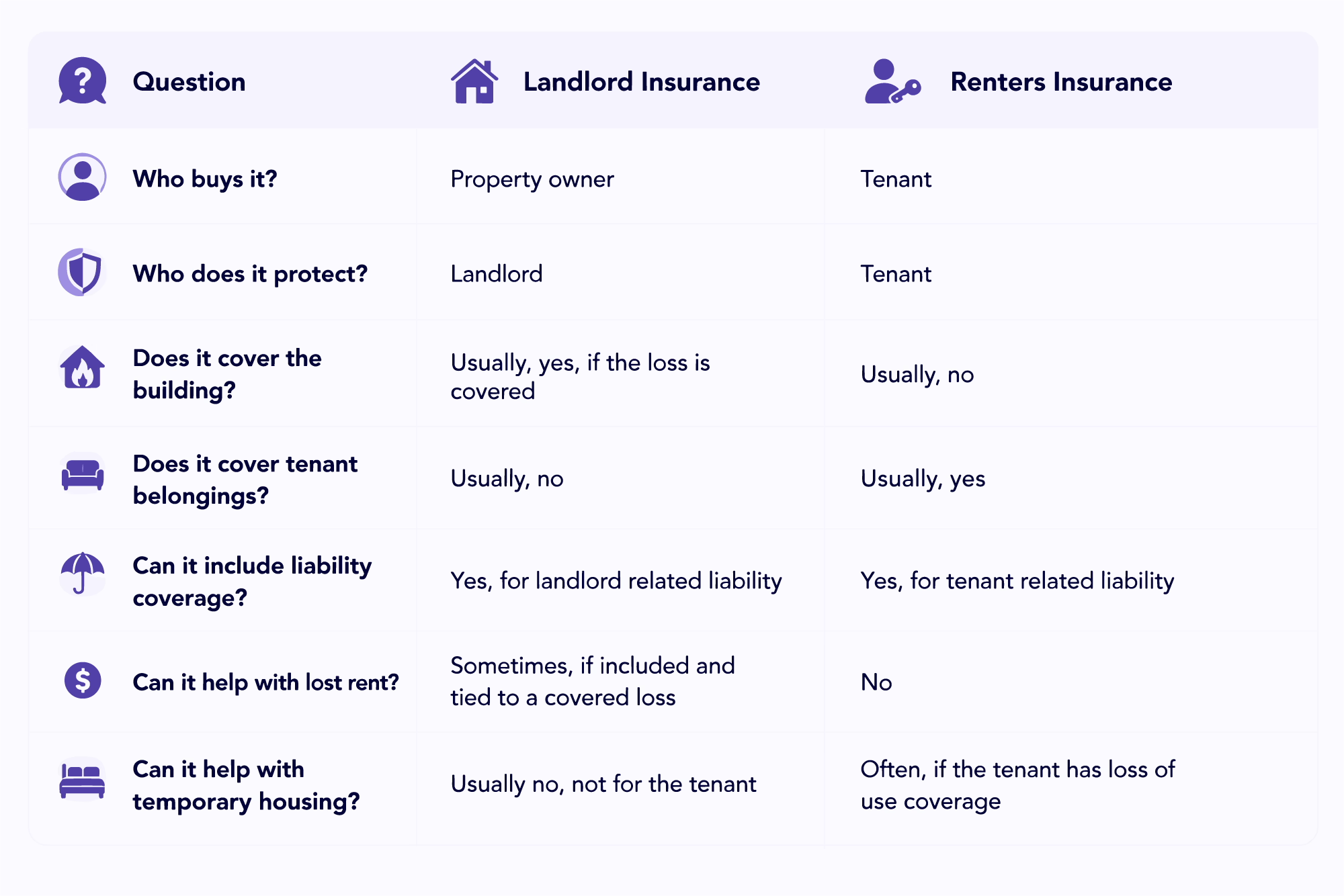
Who Does Landlord Insurance Protect, the Landlord or the Tenant?
Landlord insurance protects the owner of the rental. Depending on the policy, it may help cover the rental home, detached structures, certain landlord-owned property, landlord liability, and lost rental income after a covered loss. It generally doesn't cover the tenant's belongings.
Landlord insurance is for the person who owns the rental property. Depending on the policy, it may help cover:
- The rental home itself
- Detached structures, like a garage, shed, or fence
- Certain landlord-owned property kept at the rental
- Landlord liability
- Lost rental income after a covered loss
For example, if a covered fire damages the rental home, the landlord’s policy may help pay to repair the building. If the property becomes unlivable during repairs, the policy may also include coverage for lost rental income, depending on the terms.
The National Association of Insurance Commissioners describes dwelling coverage as coverage for the dwelling and attached structures when damage is caused by an insured peril. It also describes fair rental value as applying when part of the insured dwelling rented to others becomes uninhabitable because of an insured loss.
What Does Renters Insurance Cover?
Renters insurance covers the tenant's side of the risk. Depending on the policy, it may help cover belongings like furniture, clothing, and electronics, tenant liability, and temporary living costs after certain covered losses. It usually doesn't insure the building itself.
Depending on the policy, renters insurance may help cover:
- Furniture
- Clothing
- Electronics
- Other personal belongings
- Tenant liability
- Temporary living costs after certain covered losses
The Illinois Department of Insurance explains that a landlord’s insurance may protect the building structure, but not the tenant’s personal property. Renters insurance is what can protect the tenant’s belongings and typically includes liability protection.
Does Renters Insurance Cover the Building?
Usually, no. Renters insurance is built for the tenant's belongings and liability, not the building, which the landlord generally insures. A tenant may still owe for damage they cause, depending on the lease and state law, but that doesn't mean renters insurance replaces landlord insurance.
A tenant’s policy may help cover the tenant’s belongings, tenant liability, and sometimes temporary living costs. But the building itself is generally the landlord’s responsibility to insure.
A tenant may be responsible for damage they cause, depending on the lease, state law, and facts of the situation. But that is not the same as saying renters insurance replaces landlord insurance.
Do Both Landlords and Tenants Need Liability Coverage?
Both policies can include liability coverage, but they protect different people. Landlord liability may apply to claims tied to the rental property, such as a broken stair. Tenant liability may apply to claims the tenant caused, such as a dog bite. Whether either pays depends on the policy terms.
Tenant liability may apply if the tenant is accused of causing injury or damage to someone else. For example, a tenant’s dog bites someone, or a kitchen fire starts because of tenant negligence.
Landlord liability coverage protects the landlord’s exposure. Renters liability coverage protects the tenant’s exposure.
Can a Landlord Require Renters Insurance?
Often, yes. A landlord may require renters insurance in the lease, depending on state and local rules. The tenant buys and pays for their own policy. Landlords often require it because it reduces confusion after a loss, since the tenant has their own coverage to turn to.
This does not mean the landlord is buying the policy for the tenant. It means the tenant may be required to carry their own coverage. Landlords often require renters insurance because it reduces confusion after a loss. If a tenant’s belongings are damaged, the tenant has their own policy to turn to instead of assuming the landlord is responsible.
Landlords should make the requirement clear in the lease and follow applicable state and local rules.
Do You Need Both Landlord Insurance and Renters Insurance?
Often, yes. Landlord insurance protects the owner's building, liability, and rental income after a covered loss. Renters insurance protects the tenant's belongings, liability, and living costs. Neither replaces the other, so a well-protected rental situation often has both in place.
Landlord insurance protects the rental property owner’s risk. It may help cover the building, certain landlord-owned property, landlord liability, and lost rent after a covered loss.
Renters insurance protects the tenant’s risk. It may help cover personal belongings, tenant liability, and temporary living costs after certain covered losses.
A well-protected rental situation often needs both. Landlord insurance does not replace renters insurance, and renters insurance does not replace landlord insurance.
Covered is a licensed insurance agency. Not all carriers or products are available through Covered. Availability varies by state. Compensation may be received from carriers.


.svg)
.svg)