
Last Updated :
September 24, 2026
Home InsuranceRental Property Insurance: What Landlords Actually Need (DP3 Explained)
Renting out a home? Your homeowners policy may not cover it. Here's how DP1, DP2, and DP3 landlord policies differ and why most landlords pick a DP3.
Key Takeaway
A homeowners policy isn't built for a home you rent out, so rentals need a dwelling fire policy, and most landlords end up with a DP3 because it's open-peril and pays replacement cost. Compare quotes on the policy form and settlement basis before price, and have tenants carry their own renters insurance.
The day you rent out a house, your homeowners policy stops working like its supposed to. This is the coverage first-time investors get wrong more than any other, and it's an avoidable mistake.
Here's what a rental actually needs, why most landlords end up with a DP3, and how to check what you're really holding.
Why your homeowners policy won't cover a rental
Homeowners insurance is built on one assumption: you live in the home. Once a tenant moves in and you move out, that assumption breaks, and so does the coverage.
Carriers treat an owner-occupied home and a rental as two different risks. A rental sees more turnover, more wear, and a landlord who isn't there every day. That's why the Insurance Information Institute tells owners to call their insurer before renting a place out. If you file a claim on a homeowners policy for a home you've been renting, the carrier can deny it.
This matters most when you convert a home you already own into a rental. If you kept the old homeowners policy after moving, it may not hold up. We walked through the timing of that switch in what happens if you change your policy after closing.
What a dwelling fire policy is
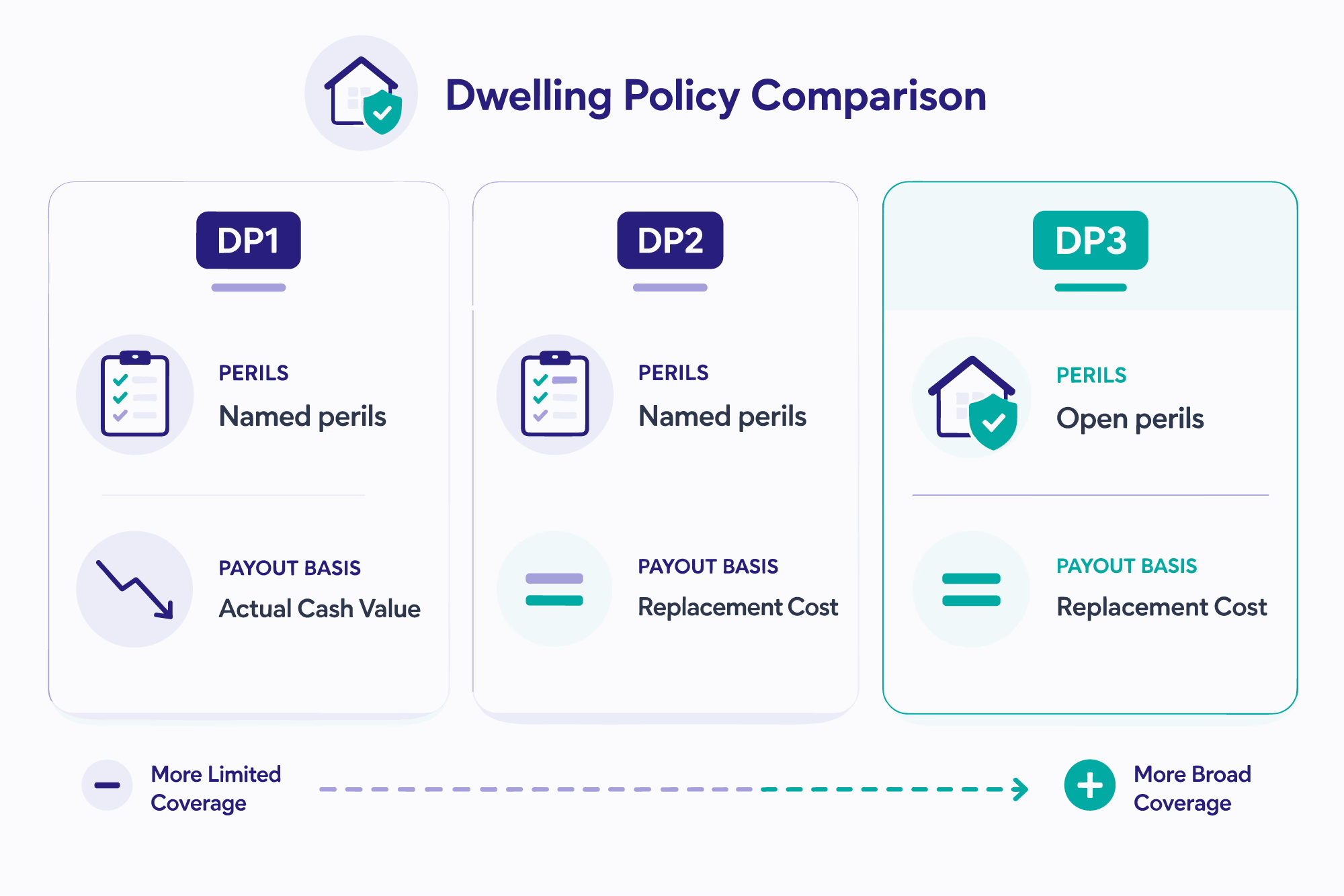
Rentals run on a different product, called a dwelling fire policy. It comes in three forms: DP1, DP2, and DP3. The number tells you how much it covers.
DP1 is the most basic. It covers a short list of named perils, which means it pays only for the causes of loss the policy specifically lists. Most DP1 policies pay actual cash value, so the insurer subtracts depreciation from your claim. An older roof pays out like an older roof.
DP2 sits in the middle. It's still a named-peril form, but the list of covered events is longer, and it generally pays replacement cost on the structure rather than actual cash value.
DP3 is the broadest of the three. It's an open-peril form, which flips the logic. Instead of listing what's covered, it covers causes of loss except the ones the policy names as exclusions, and it generally pays replacement cost on the dwelling. Exclusions, endorsements, and eligibility vary by carrier and by state, so read the policy instead of assuming.
Why most landlords land on a DP3
The DP3 gives the broadest structure coverage of the three forms, and it pays replacement cost, which is why it's the common choice for a rental a landlord plans to hold.
Something worth flagging: A bargain landlord quote is often a DP1 written on an actual cash value basis. That's fewer covered perils, plus a smaller payout on the ones that are covered. It's how a low quote turns into a frustrating claim. When you compare quotes, compare the form and the settlement basis, not the premium.
That said, the right form depends on the property. A vacant home you're about to renovate is a different risk than a long-term rental with a tenant in place. Coverage options vary by carrier and state, so the form that fits one property may not fit the next.
Landlord insurance vs homeowners: what changes
A landlord policy and a homeowners policy protect different things.
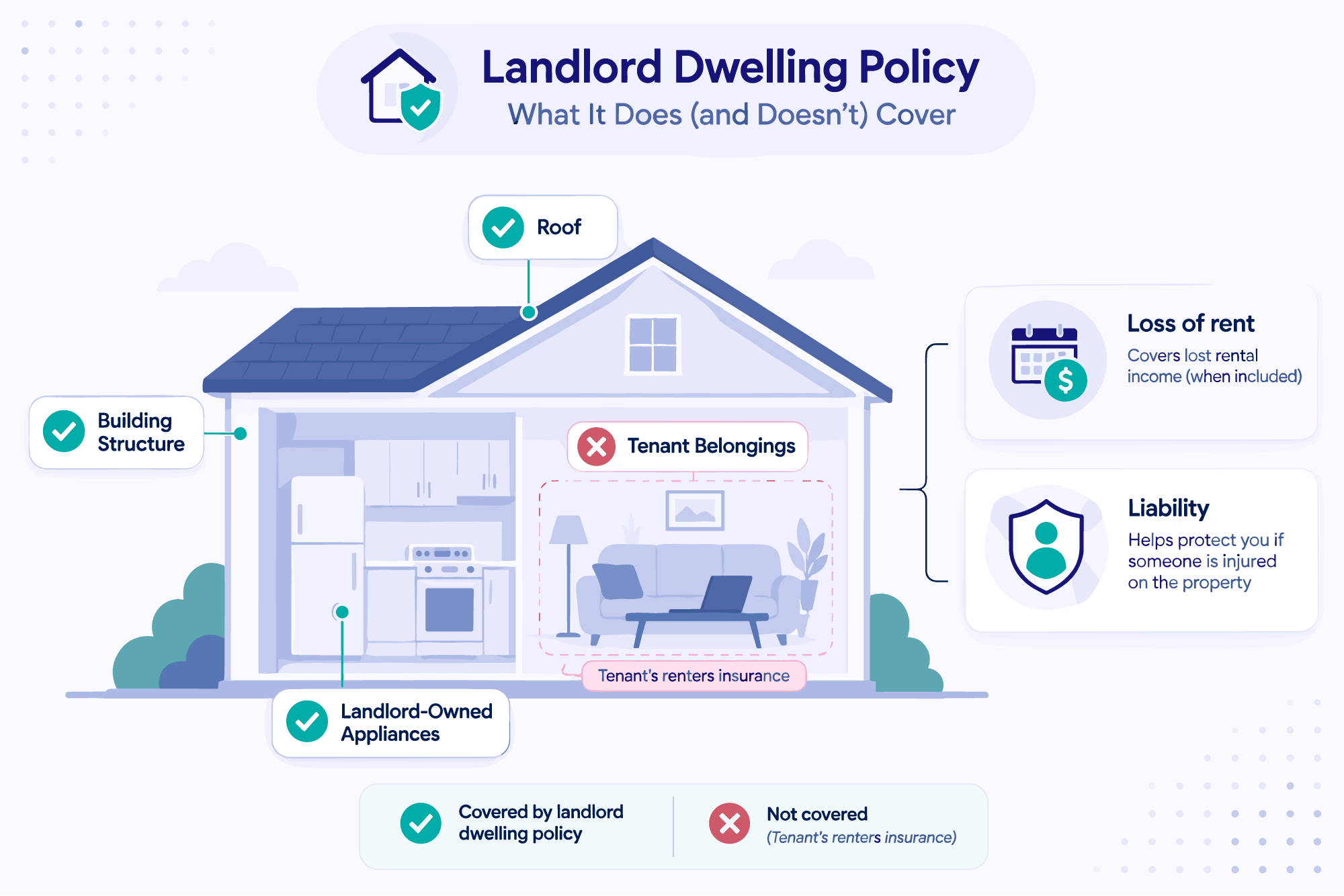
Homeowners insurance covers the structure and your personal belongings inside it. A landlord or dwelling fire policy covers the building and any property you own that stays with the rental, like appliances. It does not cover your tenant's belongings.
That's the gap new landlords miss. Your tenant's furniture, electronics, and clothing aren't your responsibility to insure, and your policy won't pay for them. Tenants cover their own property with renters insurance, which the Insurance Information Institute recommends for anyone renting a home. Put a renters insurance requirement in the lease so it's not a question later.
Coverages worth asking about
A few coverages matter more for a rental than they do for a home you live in.
Fair rental value, sometimes called loss of rent. If a covered loss makes the unit unlivable, this may reimburse the rental income you lose while it's repaired, up to your policy limits. If you're counting on that rent to cover the mortgage, ask about this one first.
Liability. If someone is injured at the property and you're found responsible, liability coverage may help with legal costs and damages, subject to your limits and terms. For a rental, this carries more weight than it does on a home where you control who comes and goes.
Other structures. Detached garages, fences, and sheds may be covered, though limits differ from one policy to the next.
The gaps that catch landlords
Flood and earthquake are almost always excluded from a dwelling fire policy, the same way they're excluded from a homeowners policy. If your rental sits in a flood-prone area, that's a separate policy to line up. Where the property is located shapes both your risk and your rate, which we covered in how location affects home insurance costs.
If you carry a mortgage on the rental and let the policy lapse, your lender can buy coverage on your behalf and bill you for it. That coverage protects the lender's interest, not yours, and it often costs more than a policy you'd choose. We explained how that works in our article on lender-placed insurance.
Vacancy is the gap people forget. Many policies limit or drop coverage once a property sits empty past a set number of days, which can bite between tenants or during a long renovation. If you know the unit will sit, ask about a vacancy endorsement. It also helps to know where property damage usually starts so you can head off a claim before it happens.
How to know what you actually have
Pull the declarations page on your current policy. Two things to find.
First, the form. It's usually printed as DP1, DP2, DP3, or a carrier's named version of one. That tells you whether you're on a named-peril or open-peril policy.
Second, the settlement basis on the dwelling and the roof. It'll read replacement cost or actual cash value. On an older roof, that difference can run into thousands of dollars at claim time.
If the form or the settlement basis isn't what you thought, that's the conversation to have before your next renewal, not after a loss.
Where to start
If you're buying your first rental or turning a home you already own into one, sort the insurance before the tenant moves in. Carriers price and write an owner-occupied home differently than a rental, and fixing it after a claim is too late.
Want someone to match the coverage to the property instead of guessing at a form? That's what we do. Start with our insurance solutions, or read the complete home insurance guide to see how a rental policy differs from the homeowners policy you already know. If you're weighing your options at renewal, re-shopping your coverage is a fair place to begin.
The short version
Your homeowners policy doesn't follow you into being a landlord. Rentals run on dwelling fire policies, and most landlords land on a DP3 for its open-peril, replacement-cost structure. Read the form and the settlement basis before you look at the premium. Ask about loss of rent if that income covers your mortgage. And tell your tenants to insure their own belongings, because your policy won't do it for them.
Covered is a licensed insurance agency. Not all carriers or products are available through Covered. Availability varies by state. Compensation may be received from carriers.


.svg)
.svg)