
Last Updated :
September 24, 2026
Home InsuranceWhy Your Escrow Went Up (And Why Insurance Is Usually the Reason)
Mortgage payment went up on a fixed-rate loan? Your escrow likely rose, usually from higher insurance premiums. Here's how to check it and what you can do.
Key Takeaway
Fixed-rate loan but your payment jumped? It's escrow, and rising insurance premiums are often why. Learn how to check the math and shop the part you control.
Your mortgage payment jumped and nobody warned you. The first question most people ask is whether their interest rate changed. If you have a fixed-rate loan, it didn't. The part that moved is your escrow. And the number pushing your escrow up is almost always your homeowners insurance premium.
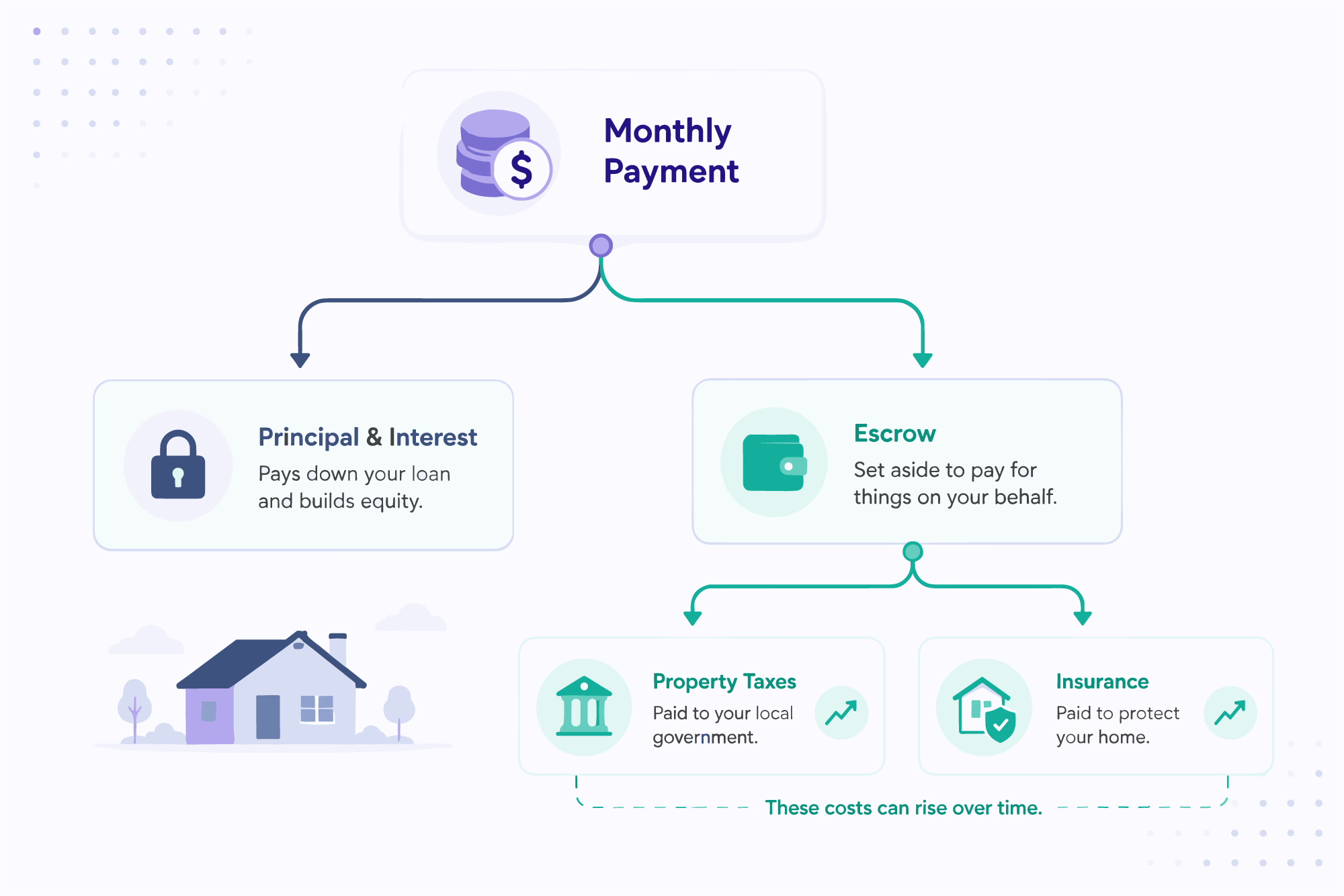
Your payment has two parts. Only one of them moves.
A fixed mortgage payment is really two payments stacked on top of each other.
The first part is principal and interest. On a fixed-rate loan, that number is locked for the life of the loan. It does not change, ever.
The second part is escrow. Your servicer collects a slice of your property taxes and homeowners insurance every month, holds it, and pays those bills for you when they come due. Taxes and insurance both climb over time. When they do, your escrow has to collect more to keep up. That is the piece of your payment that went up.
So before you call anyone, separate the two. If your principal and interest is the same as last year, this is an escrow problem.
What an escrow shortage actually is
Once a year, your servicer runs an escrow analysis. Federal rules require this review at least every 12 months, and the Consumer Financial Protection Bureau sets the method every servicer has to follow.
But your servicer doesn't just collect enough to cover the bills, it also holds a cushion in case taxes or insurance come in higher than expected. Federal rules cap that cushion at one-sixth of your annual escrow payments, which works out to about two months' worth.
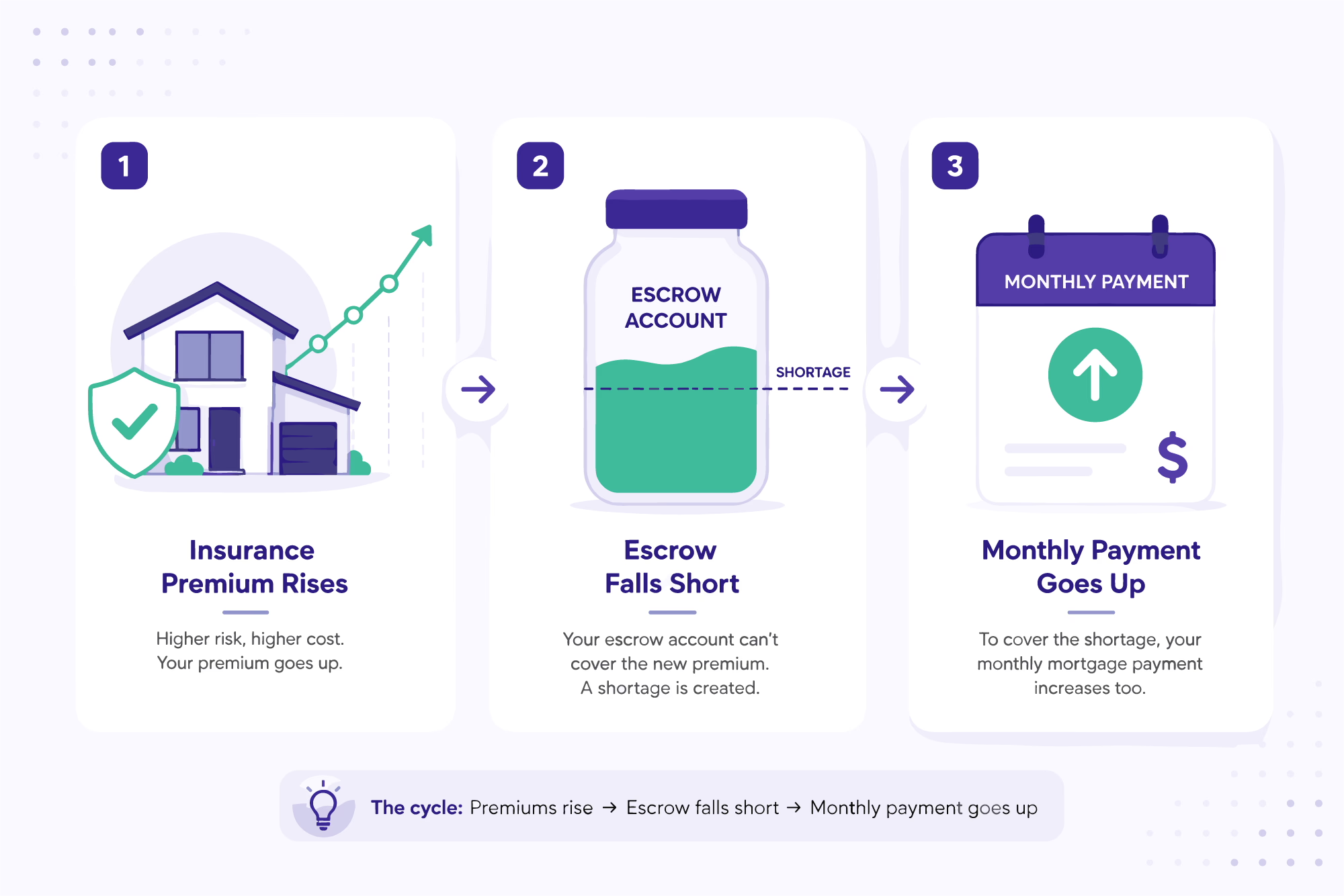
An escrow shortage happens when your analysis projects that the account will dip below the required amount over the next year. When the projected bills go up, the account falls short, and your servicer raises your monthly payment to refill it. You can read the CFPB's plain rules on shortages and repayment in their mortgage servicing guidance.
We wrote a companion piece on this exact topic: Why did my mortgage payment increase.
Why insurance is usually the culprit
Property taxes move your escrow too. But over the last few years, rising insurance premiums have been a major driver.
Home insurance rates rose almost 50% nationwide between 2020 and 2025, with a 6% jump in 2025 alone, according to LendingTree's 2026 State of Home Insurance report. A separate study from the Consumer Federation of America found premiums climbed about 24% over three years, rising roughly twice as fast as inflation.
When your premium goes up a few hundred dollars at renewal, your servicer has to collect that same amount through escrow. Spread across twelve payments, plus the cushion top-up, a single premium hike can add a noticeable chunk to your monthly bill.
Even in Texas, where the 2025 statewide increase was small at 0.6% per LendingTree, premiums stayed high after several hard years, and coastal wind exposure keeps pressure on rates. Where you live changes how much this hits you. We broke that down in how your location affects your home insurance costs.
How to check whether the increase is fair
Servicers make mistakes. Before you accept a higher payment, line up the numbers yourself. Pull your annual escrow statement and check four things.
- Your property tax bill. Match the tax figure on the escrow analysis against your latest county bill. If they don't agree, your servicer may be projecting the wrong amount.
- Your insurance renewal. Compare the premium your servicer used against your actual renewal notice from the carrier. This is where the increase usually lives.
- The projected low balance. The statement shows the lowest point your account is expected to hit. That number is what triggers the shortage. Make sure it lines up with the bills above.
- The new monthly amount. Add the shortage repayment to the new base escrow and confirm the total matches what your servicer is now charging.
If any of those numbers looks off, call your servicer and ask them to walk through the analysis line by line. You have the right to that explanation.
Your repayment options
If the shortage is real, you generally get two choices under federal rules.
You can pay the shortage in one lump sum, so it isn't added to your monthly payment. Or you can spread it out, and your servicer will fold the shortage into your monthly payment over at least twelve months. Your servicer can offer the spread-out option on the statement, but it cannot force a lump sum on you.
Even after you clear the shortage, your base escrow payment stays higher, because the underlying tax and insurance bills are higher. Paying the lump sum removes the catch-up amount, not the new normal.
Where you have room to act
You can't argue your way out of a real tax increase. Insurance is the piece you have some control over.
Start by shopping your renewal instead of accepting it. Comparing carriers lets you see how different companies price your home, since rates and coverage options vary by carrier and by state. If a renewal comes in at a different price, the insurance portion of your next escrow analysis reflects that. Here's a full walkthrough: re-shopping your home insurance.
A few other moves may affect how carriers view your risk. Certain home upgrades can factor into how a carrier prices your policy, and we covered those in home upgrades that can lower your insurance risk. If you're weighing a coverage change after buying, read what happens if you change your policy after closing first, since escrow-funded policies have a few extra steps.
If you'd rather have a person run the comparison with you, that's what we do. You can start with our insurance solutions or read the complete home insurance guide to understand what you're paying for.
The short version
A fixed-rate payment that goes up is an escrow story, not a rate story. Taxes are part of it, but rising insurance premiums have been a major driver in recent years. Check the analysis against your real bills, pick the repayment option that fits your budget, and treat your insurance renewal as something you can shop, not just accept. That last step is the part you actually control.
Covered is a licensed insurance agency. Not all carriers or products are available through Covered. Availability varies by state. Compensation may be received from carriers.


.svg)
.svg)